Get In The Game: Sports, Art, Culture
And welcome to the Perez Art Museum's official podcast, InConversation, produced by its education department. I'm Armando Zamora, digital interpretive content coordinator and your host. This program is meant to supplement other educational materials the museum offers. However, instead of talking about the art on the walls, we'll be talking to community members with differing backgrounds about the issues and themes the art aims to tackle with a focus on Miami and South Florida. This episode is inspired by the work of Get in the Game, Sports, Art, Culture.
Speaker 1:Speaking with gallery and media programs manager Corvin Graves about grassroots sports initiatives for local youth and the upcoming FIFA World Cup are
Speaker 2:Pat Santangelo, board member and cofounder of the Little Haiti FC Soccer Club. And
Speaker 3:My name is Jennifer Roche. I'm the director of community and legacy for the Miami World Cup twenty twenty six host committee.
Speaker 4:Fantastic. We are super excited to have you here, and we're really excited to hear more about your role, your experience, and some of the things that you're looking for, looking to happen or looking to do for moving forward for the twenty twenty four six, excuse me, World Cup. Before we get started, though, I did notice some things that I wanted to bring up. I noticed you went to UNC Chapel Hill. I am also a North Carolinian, so I was really excited.
Speaker 4:Okay. Tar Heel's in the house. Yes. That's so fantastic. Very, very cool.
Speaker 4:I also noticed you went to University of Miami, which I also did. So very strong connections here. And I'm very excited to talk a little bit more.
Speaker 3:Yes, I rep both but Carolina will always have my heart. That's where I did my undergrad and then but Miami gave me my adult life. I moved here for grad school in 2015 and have never left. So just started working. So I'm a true Miami girl at heart, but UNC was my first love.
Speaker 4:Wow, that is beautiful. Very, very similar experiences here. What I'd like to do, Jennifer, is we don't know a lot about you. I want to see if you can give us a little bit more info about your role, what you do, and what brought you to this position.
Speaker 3:Yeah. So I moved here in 2015 to pursue my career in sports. I knew that I always grew up doing sports. I love sports, and it kind of gave me a voice because I was a super shy kid growing up. So once I started on that master's program, I made it a mission to involve myself in as many things as possible.
Speaker 3:So I did a lot of internships, just various things across the board. Was with the hurricane club. I did the Miami open back when it was still on Key Biscayne. And then my final internship to graduate was with Special Olympics and they ended up hiring me. So that's where I really learned about community programming and grassroots sporting organizations touching on governing body.
Speaker 3:But essentially, I learned how to do sports competitions. And at Special Olympics, we did 18 sports year round, free of charge for children and adults with intellectual disabilities. So we had almost three events per week managing the South Florida chapter, which would then feed into the state games, the national games, the world games. So I was there for four years and then I went over to Conkacaf. They had a new role that focused on kind of legacy and grassroots programming, but linked to the legacy left behind by the Qatar World Cup in 2022.
Speaker 3:So that's where I really got my football soccer legs. I mean, that was a crazy experience. I got to travel all over the 41 countries that CONCACAF represented, and really just learn about the passion behind soccer and just how huge and powerful of a platform it is, and how it's able to bring cultures together, create change, and then be the draw to then bring such great elements around that. So I've now been with the host committee almost a year and a half. And to me, I'm taking everything I learned and everything I saw at Conkaca and just applying it here in Miami.
Speaker 3:In Miami, we have all that cultural representation right here that I saw on the road. And it's just so exciting to me to be around people that care so much about this sport. And then for me, my motto is always for the kids. That's kind of my driving factor. And so everything I do, kind of thinking back to me, who was the little girl who didn't really wanna get out there and do all these things, and how powerful it is to just have coaches that care, have opportunities for kids to get out there and try new things.
Speaker 3:And so that's what I'm working on at the host committee. So specifically, in my role, we are developing a lot of things, but we are focused on three main pillars for our strategy. Our first is access to football. So that is a combination of infrastructure projects, but most importantly paired with educational initiatives and chances for underserved communities to access the game and for us to build capacity with coaches, and linking them to a bunch of organizations that are already here in South Florida that are able to kind of teach and facilitate programming on soccer for good. So that's our first pillar.
Speaker 3:Our second is on sustainability, just because again, this is a mega event. So how are we being conscious with all the things that we have to do, how we select our vendors, and then being in Florida, how are we tying in some of this messaging around keeping our planet safe? And then the last pillar is community engagement. We cannot do this without community. This is a huge initiative.
Speaker 3:This is a once in a generation type of opportunity to have an event this size coming to Miami in addition to all the other 15 host cities that are hosting World Cup matches.
Speaker 4:Wow. Okay. So that was a lot of really, really good points. And I took some notes while listening to you speak because I know there are some things that we wanna dive into a little deeper. I do wanna say I love soccer.
Speaker 4:I played it as a kid, so it's really exciting to get a chance to hear your fire being lit with working in Qatar. Very exciting. And it's very exciting to have Miami be one of the host cities here. So you talked a little bit about community. I don't know if you know, but we've in this episode, we've done other interviews with the Little Haiti Football Club, and we've spoken spoken to to different team members, young and older, about their experience with community leagues.
Speaker 5:So my name is Mary Ramirez. I am from Honduras. I was born and raised in Honduras. I came to this country with my mom and little brother about six years ago, and I've been here ever ever since. Whenever we got here, I stopped playing soccer for a little while, And then I started back to soccer my sophomore year of high school.
Speaker 5:And that's where I found Little Haiti. Well, I mean, I didn't I honestly didn't know anything about Little Haiti. It was my high school coaches that told me to join them just so I could get trained on the spring season. So, yeah, that's how I kind of went.
Speaker 6:I'm Gustav Angeline. They call me Angie to take it easy. I was born in Haiti. Right now, I'm living in Miami. Yeah.
Speaker 6:Before in soccer, I was playing for the for my country, Haiti, the national team. On 2018, I was participate in the World Cup for the senior. I'm I'm here in Miami in United States right now by myself. I don't have enough family here. I just got my cousin and my big brother.
Speaker 6:Before I was in the academy to the national team, like, about u u fifteen to u twenty. So I was doing practice right there. And then with my potential, they helped me to grow, to keep practice soccer. That's why I participate in the big level.
Speaker 3:Well, Little Haiti, I know them. I've known them ever since I started working in the soccer space. So 2020, once I got to Conkacap, they are a true model of a free soccer organization that goes above and beyond. They are the only non pay for play soccer club here in Miami. And not only that, so the kids aren't paying.
Speaker 3:They're also making sure to provide all these services. So for families that are maybe separated from kids that are coming over from Haiti, they're making sure that they're getting them through school, that they're using their huge network to find places for people to stay, to make sure they're getting their health screenings and everything like that. So Little Haiti is just a great example of if we put the funds and kind of charging to the side, what can truly be done. And they are, I mean, amazing powerhouse as well. So we will be working with them.
Speaker 3:We do have an announcement that will come out soon on how we've supported them and how our mission is to again, highlight and then hopefully be able to pair resources to those organizations that are doing the work on the ground. So we will be working with them and we've worked with them in the past to provide as many opportunities again to access. So whether that's through our partners, if there's any other opportunities, if there are any resources that we can point them to. And then we do a lot of coaches education and capacity building sessions with them as well. But yeah, to me, getting kids in the game and taking the business side, it's still a business, but it's very hard with this pay to play model now currently in Florida.
Speaker 3:And even Little Haiti at their park, the four pay clubs have been kinda inching in on their territory. But they are so great, they go above and beyond and that's truly a community model of excellence in my opinion.
Speaker 4:So you said for play, And just for our audience, can you talk to us a little bit about what that means?
Speaker 3:Yeah, so the pay for play model, especially in The US where all these youth clubs are just charging astronomical amounts in order to be part of their academies. And so to have thousands and thousands and thousands of dollars of registration fees as a base, and then requiring, okay, you have to travel to this amount of games, you have to have hotel, you have to have parents that are able to take you to these places. It really cuts out a large part of the underserved community that are just unable. If talent is there, they are unable to meet the monetary requirements for them to kinda get the shout and the play that they need. So the foreplay system in The US is a huge monster to tackle.
Speaker 3:But I know as much as I can try and do during my portion here at the host committee, but most importantly, connecting the boots on the ground to those governing bodies that will kind of carry the torch. So Conker Kap is headquartered here. We're working closely with the US Soccer Foundation. We're also working closely with US Soccer Federation. They have their own foundation called soccer forward, and their kind of commitment to be a resource and kind of a hub on guiding us cities and supporting the activity going on the ground for this World Cup.
Speaker 3:And then as we're looking to 2031 when the Women's World Cup will hopefully be back in The US soil.
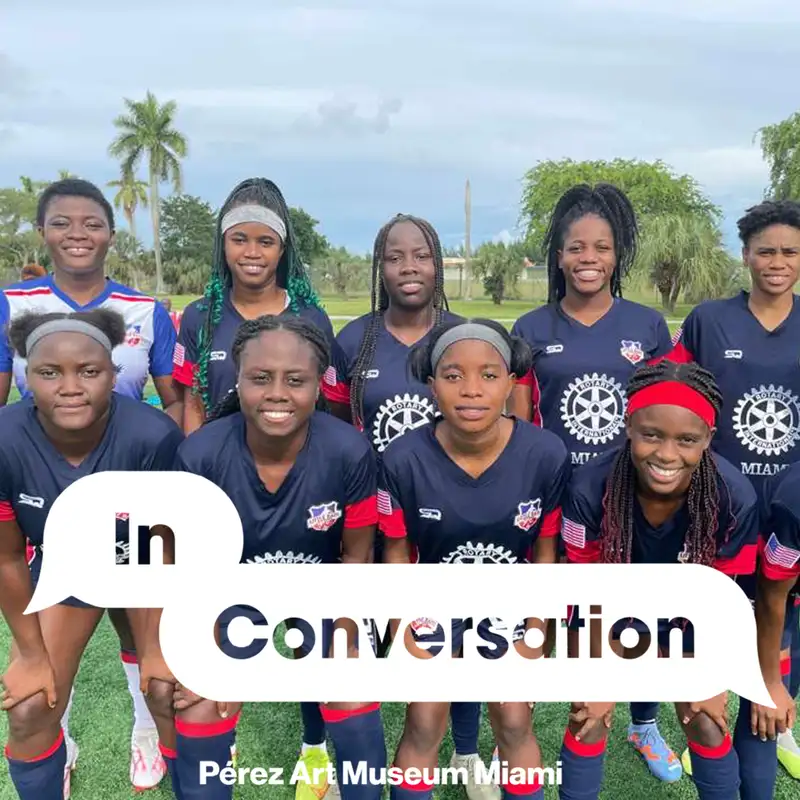
Speaker 1:To further understand the reach and scope of Little Haiti Football Club, cofounder Pat Santangelo explains the history of the club and what they provide for the youth community.
Speaker 2:It started twelve years ago with high school boys from Miami Edison High School. The coach at the time, Don Gomez Lalu, had a concern because the children or the players he had were really, really talented and most of them were college material. But what would happen is they would drop out of school for various reasons, either gang affiliations, drug use, jail, all kinds of problems that they succumbed to in the intercity. So his theory was keep these guys busy all year round and maybe they won't get in trouble. At the time, I was working in public affairs at the city of Miami mayor's office for Mayor Tomas Regalado.
Speaker 2:And the problem we had was when Lalu came to me to ask about, hey, how can we get a pitch? How can we get a field? We happened to have a field in Little Haiti that had been built eight years before that, that never had soccer on the field because there were no programming. A lot of times in government, they put money into facilities in infrastructure, but not into programs. The people and the children never get any benefit from any of this.
Speaker 2:So Mayor Rigolado worked with me, worked with the soccer club, we were able to get the Little Haiti Soccer Park to use for the program. Since then, the program has included women and also has children from the age of five years old all the way to UPSL, United Premier Soccer League, which is young adults up to early 20s. And in the last twelve years, every child in this program graduated high school and eighty percent went on to college or university or any type of other further education. That track record is pretty much the best of any anti poverty program in the city of Miami. There is no program, gang alternatives, stay in school, stay off drugs, that can boast of a success rate that Little Haiti FC has had in the last twelve years.
Speaker 2:Since then, Little Haiti FC has moved to the city of North Miami and is about to start in the city of North Miami Beach. It is the only free youth soccer program in the whole state of Florida. The beauty of Little Haiti of C is that every child has the opportunity to play for free. Most people complain about US soccer as being pay to play and they're leaving a lot of talent on the table, so to speak, and they never get a chance to play the game. Little Haiti FC has broken that mold.
Speaker 2:People have told me that it's impossible to do this twelve years ago. But here we are twelve years later, not only in the city of Miami and Little Haiti neighborhood, but also in North Miami, North Miami Beach. Now, what is the formula? How was Little Haiti FC able to expand to two more cities and not charge? The plan is and the formula is we go to the developers that are coming into these cities.
Speaker 2:Some people call these developers gentrifiers or maybe even bad guys. But what we do, we harness their, I would say, sense of community. Once they find out about the program, they want to know more, they come down and see us and they say, Wow, this is something worth investing in.
Speaker 1:While it's hard to ignore the political tensions in The US and the history of protests surrounding previous World Cups, there's often a message of unity with the event. Corbin asked both Little Haiti Football Club and Jennifer about what that means and looks like for Miami as a host city.
Speaker 4:I wanted to ask you, in what ways do you think the tournament, this World Cup, is going to build a world of collective belonging and things that matter to the community here in Miami right now?
Speaker 3:Well, 2026 in general is a monumental year for sports in Miami. We've had but actually the World Cup is like the kind of little cherry on top. So prior to, before we even kick off the tournament, obviously, we had a huge moment for our community with playing in the national championship game, and us being able to host that there are here. We had the Winter Classic from NHL. The World Baseball Classic is currently kicking off.
Speaker 3:We have the open. We have Formula One, NASCAR is coming back. So we are cementing our kind of legacy, Miami legacy, as being not only a global destination for tourists, but apparently the venue and location of choice for all these mega sporting events and global sporting events. So I think this is a big year for us to show the world what we are capable of like, okay, yeah, we do the beaches great. We have the clubs great, but we are hosting every single mega sporting event no matter the sport, and we're gonna do it well.
Speaker 3:So I think that is kind of important and that kind of really will cement kind of the future of what it looks like bringing sports to Miami, once we get through this year. But it is a crazy year of all the events. And I think, you know, I just went last week to two weeks ago, the DDA had their kind of economic sports thing. And I'm just like, it's just so impressive. I was like, say what you want about Miami, but the fact that like, look at the roster and look like what we're going to deliver this year.
Speaker 3:And the fact that Miami doesn't have a true sports commission like some of the other states. So for example, our counterparts in LA, they have a sports and entertainment commission. So it's kind of the same group of people. Anytime a mega event comes to town, they're all working. Okay, they might have a Super Bowl, they have World Cup, they have all these other things.
Speaker 3:Versus in Miami, there hasn't been a true sports commission for several years now. So all these events that are coming, it's an independent host committee or a host committee that has to take it on. So I think that part of the legacy for people that are involved in sport and people are in this realm is to see, okay, great. We're doing all of this every single time. Maybe we have to reinvent the wheel.
Speaker 3:So maybe after 2026, it's a time to all all of us come together and see, you know, what happens next if we're gonna continue to host events of this caliber and make sure it's at the quality it needs to be.
Speaker 2:So what do I think about the World Cup being in Miami and Miami being a host city? There couldn't be a more apropos host city for the game of soccer. We have people here from Brazil, Portugal, Italy, England, Australia, Hong Kong. We have people from all over the world here And to host this world sport in the city of Miami is such a great honor. And although most of us are not gonna have the amount of money it's gonna take to buy a ticket to the game, There are so many, events going on such as the Fan Fest at Bayfront Park that's gonna be open during the game.
Speaker 2:It's a free, place that we can all go. Many, many cities, the city of North Miami, North Miami Beach that I'm I have my program in along with the little Haiti. We're gonna have big screen TVs available when Haiti plays because Haiti will be playing in Boston and I believe Cincinnati against teams like Brazil in their group. The kids and everybody, the families here in Miami is is there's there's all kinds of, opportunities to watch these games in a community setting on big screen TVs, and it'll be such an event. It'll be so much fun and is maybe a once in a lifetime thing, like Mary said.
Speaker 5:I mean, I would say to enjoy it. It is once in a life thing, and this is happening this year. So, I mean, if you're living it if you're living here in The States, just enjoy it because it probably I don't know if it will happen ever again.
Speaker 7:When you think of impact, what do you think what do you want your work or the work in the community that you've done so far? What do you want it to reach or what do you want people to feel or understand based on the work that you've done with Little Haiti Football Club?
Speaker 2:Well, Little Haiti Football Club is one vehicle to get kids from, in many cases, from abject poverty to at least the middle class. And the way we do it is that we can pretty much guarantee every kid in our program right now, those 400 kids or whatever who are playing those little kids from five years old up, we can pretty much you can bet pretty solid bet that all those kids are gonna graduate high school. And it's a pretty solid bet that most of them are gonna go to college. Once you go to college, I know Mary is studying nursing. When she completes her four year degree, she's going to be a registered nurse.
Speaker 2:Last semester, Mary got a four point zero GPA. Special commendation from the chancellor of the school. She's killing it academically. So again, guaranteed she'll be RN at the end of four the end of four years. Angie, talk about moments in the playoff game, in the champion conference championship game.
Speaker 2:Let me start that over again. Angie, in the conference championship game against the number six team in The United States, they ended up getting one of their players a red card. They played with 10 players for two thirds of the game against the number six team in the country. The game went to double overtime. A free kick became available for the University of Arkansas girls.
Speaker 2:Ordinarily, the goalie takes that free kick. This free kick was from almost midfield. Angie is the captain of the team. She waved off the goalie. She said, I'm taking this myself.
Speaker 2:Angie rocketed that ball to the top corner of the net scoring the winning goal, which enabled that school for the first time in its history to go to the NGJCAA national championship.
Speaker 6:Yes, miss. But tell them, before I kick the ball, I was doing practice, and I got the free kick in the white space.
Speaker 2:So the day before, you were practicing that kick
Speaker 6:Yes.
Speaker 2:From the same
Speaker 6:spot? Practice. We was doing practice.
Speaker 2:So you had it?
Speaker 6:Practice. I stay on the field a little bit.
Speaker 7:Yeah.
Speaker 6:And then I keep doing practice free kick. Then in the game, I get the free kick in the right position that I practiced before.
Speaker 7:Wow. That sounds like a direct correlation. Yeah. Angie, that sounds like it's a direct correlation between your practice and you doing that free kick. And how did that feel when you got that free kick?
Speaker 6:When I got there, I say I listen my other teammate. They say they they don't want to go to the penalty kick because we we we're not too good to the to kick a penalty. And then me, I don't want that too. I say, okay. Let's finish this.
Speaker 6:I I take the ball. I take a little bit breath, and then I say, go, Angie. In my head, I say, try to find the seconds, the seconds fence. And then I take my breath and position set and then I shoot it.
Speaker 7:What are your thoughts on the representation of sports in art and in a museum? Do you think it's important? Do you think it's maybe not so important? Or do you have interesting feelings about it? And we'll start with you, Mr.
Speaker 7:Pat.
Speaker 2:Well, you know, they say soccer is the beautiful game. And one of the reasons why it's a beautiful game, when you watch the artistry of these players on the field is phenomenal and the grace and the training. And when you talk about maybe ballet would be considered an art. But when you watch these kids, when you watch these these children, the dynamic of the of the game and the the creativity, as you heard Angie just describing how she visualized that kick. The day before that game, she was practicing that kick.
Speaker 2:When the game came up, she visualized completing that kick, and she was successful. So visualization all the time, planning, even the dynamics of the uniforms, the equipment, the engagement of the fans is all similar to a ballet. And everything comes together and it's a beautiful thing.
Speaker 7:That's phenomenal. Thank you so much. Mary, Angie, what are your thoughts?
Speaker 5:I think art and soccer are very important in our community, especially for kids. And like Pat said, I think sports and art are very similar in a way if you think about it.
Speaker 6:Yes, it's important because sport in general, it's connect people inside. There is a love. You don't know anyone just like soccer. You just meet some people you don't know. You connect with you quit like family.
Speaker 6:Even even if you live in somewhere out your country, with sake, it's possible to connect, to know more, to learn more things. In all of that, I think there is passion on it.
Speaker 3:Definitely. Well, was like, actually, Pam, you guys actually hosted my first community clinic. So we had our one year out celebration at the Perez Art Museum. We had the kind of press conference at the top with the beautiful view of the bay. And then afterwards, of all the guests descended down and we had 200 kids playing in their first free soccer clinic.
Speaker 3:So that was a super special moment for us to kick it off. And yeah, for us, it's all interlaced. And FIFA has done a great job in intertwining all these different elements in part of our milestones. And then it's us as a host committee to see how we make it Miami. So for example, last year at this time in March, we were revealing our official poster campaign.
Speaker 3:So we selected nine artists from the community to all submit their beautiful artwork on this would represent Miami for the World Cup. We had so many great submissions and we kind of did a huge reveal event and then kind of our winner was chosen who's Ruben Roubaix. So we have the beautiful majestic flamingo as they call it, with a beautiful soccer ball that represents all the different neighborhoods in Miami. In addition to the poster campaign, we had a sound campaign. So a jingle for the city.
Speaker 3:Each city was tasked to remix kind of the FIFA jingle. And again, bring an artist that will bring that Miami vibe and that Miami essence. So all the campaigns that we're doing, especially on the marketing side, is how we tie in all these other elements of entertainment and sport and the intersection between that. And then when it comes to, you know, food and our fan fest and everything like
Speaker 5:that,
Speaker 3:our fan fest will be at Bayfront Park, a twenty three day fan fest, free of charge for all Miami or not all Miami residents, but all residents period, all visitors. And there, that's where we really wanna showcase again what Miami is about. So having dance performances from all the cultures, having food vendors from all the different cultures, having artwork displays, having all these things there. So for us, it all culminates in the fan fest where we're able to pull all these elements together. That yes, soccer is obviously the draw, but it's so much more than soccer.
Speaker 3:It's all these other things that make the true fandom and the excitement and the celebration, which is World Cup where we don't get to work or no one works for thirty nine days straight.
Speaker 7:Miami is a very unique location as we all know. I wanted to ask you, Mr. Pat and Mary and Angie, you, what you think about the unique makeup of Miami's community, immigrants, locals, different languages. How do you feel that that uniqueness of Miami is significant for Little Haiti football club and soccer community in general?
Speaker 2:Well, Miami is certainly unique. A lot of my friends from up north, tell me that the thing they like about Miami is that it's so close to The United States. And you can be there and you can get off one exit on I-ninety 5 and you're in Little Haiti. The next exit, you're in Little Havana. If you want to have Peruvian food, Colombian food, it's like the best of South America, Europe, Asia.
Speaker 2:It's the best of everything. So I feel that Miami really has the best of everything. In fact, the opportunities that, the Perez Art Museum and some of these other major institutions, provide to the citizens of Miami as well as the tourists and the visitors, makes Miami one of the greatest cities in the world.
Speaker 5:I mean, yes. So, basically, what mister Pat is saying is very unique, especially for me because I am Hispanic. And so there's so many Hispanics in here, and I feel at home. And everybody speaks Spanish. Everybody's very I mean, you just feel at home.
Speaker 5:Yeah.
Speaker 6:Yeah. That's the same thing. I I feel like everything is in my hand. My people. When I came in The US, I speak English little bit, but I can understand people.
Speaker 6:When I get there, I hear Creole in my head, my language. I can communicate with people, and then I keep doing progress. Yeah.
Speaker 1:Avenues for youth to express and find themselves will always be crucial for personal development and fulfillment. As we learned in this episode, the work of Little Haiti Football Club, the World Cup, and its satellite events provide real moments for people to connect and find a love for sport. We thank you for listening to this episode of InConversation. Credits and additional information can be found in the show notes. We end with a final thought from Angie of the Little Haiti football club.
Speaker 7:Angie, did you have anything to add?
Speaker 6:Oh, yes. What I what I have to say is in sport. If you're doing soccer, put everything in work. You have a dream, keep working, and then your dream gonna become true.
Speaker 7:Wow. That's a beautiful sentiment. Thank you so much.